Precision-engineered for the virtuoso who demands the
ergonomics of a classical build with the harmonic brilliance of steel.
Steel Soul, Classical Heart.
The Crossover Evolution:
Steel String Classical Guitars
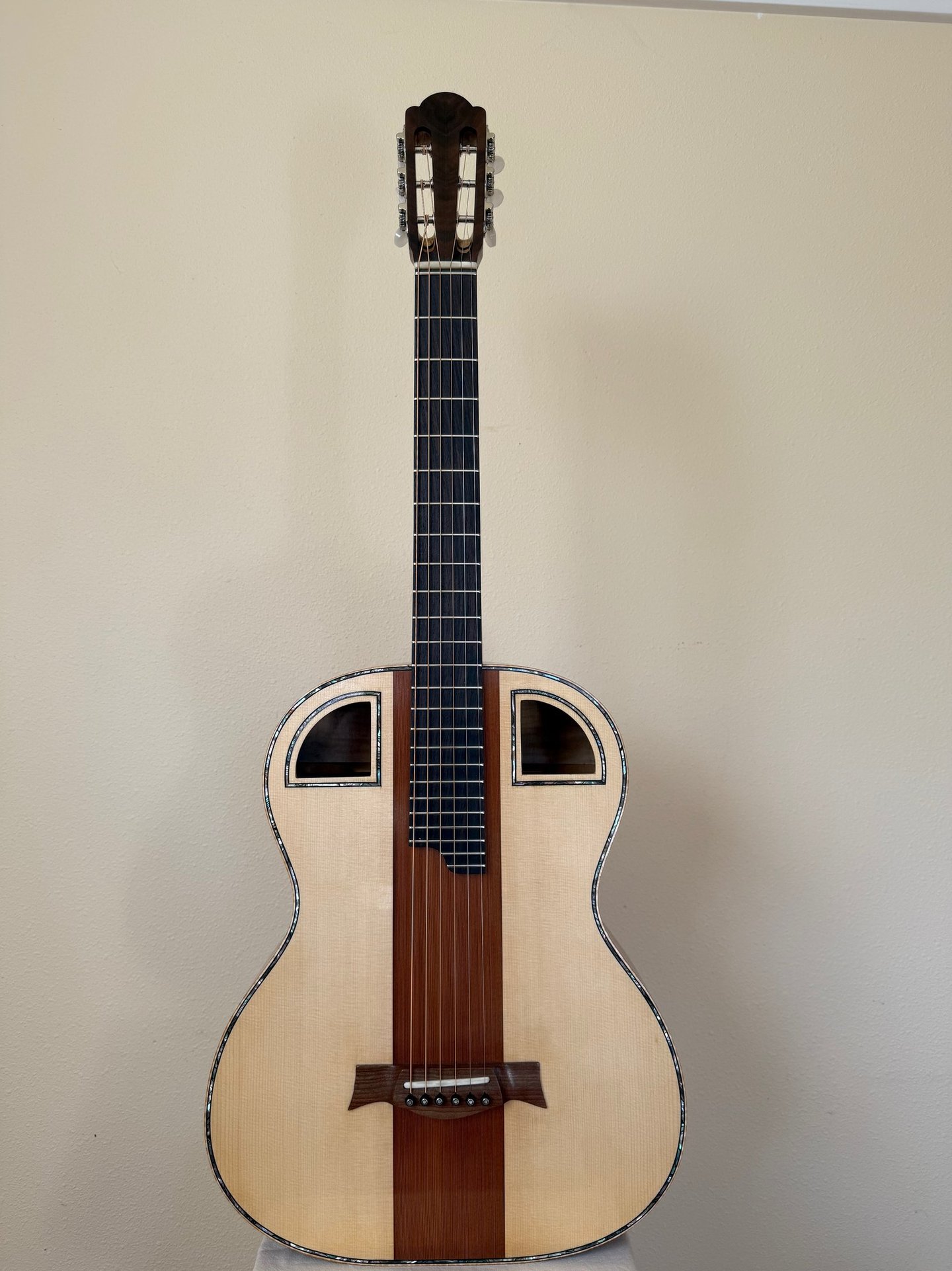
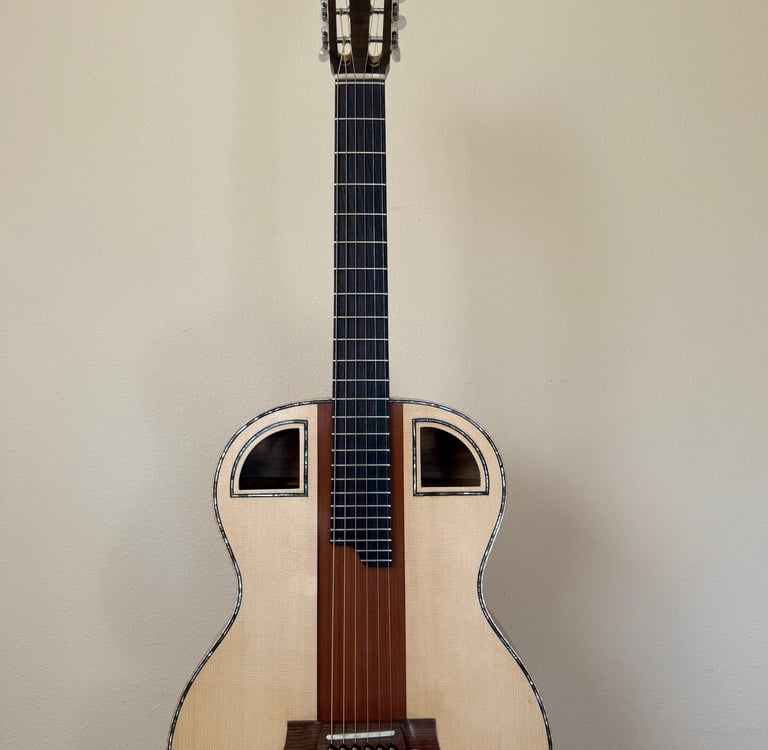
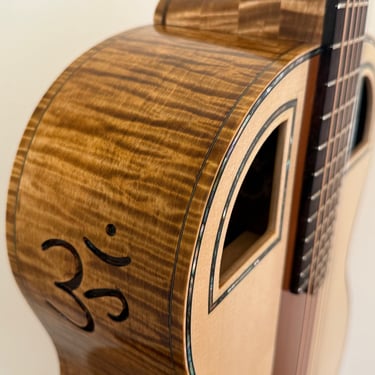
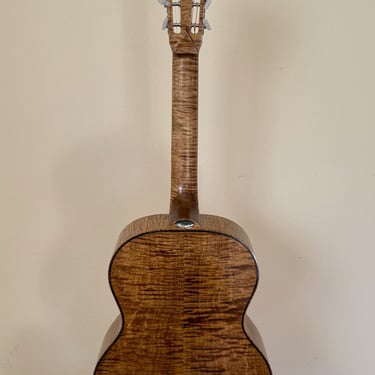
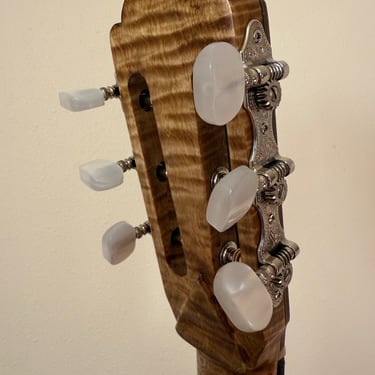
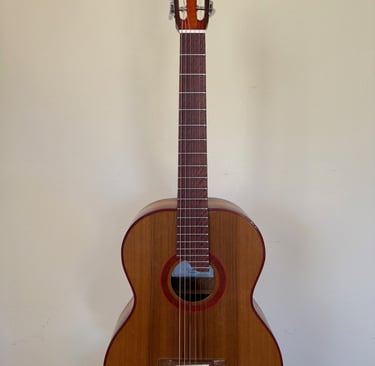
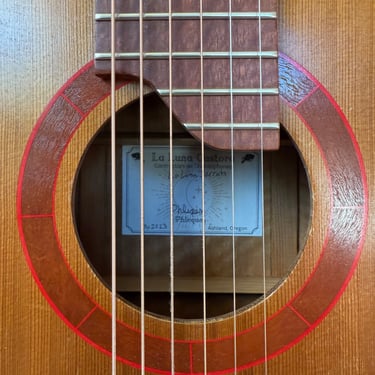
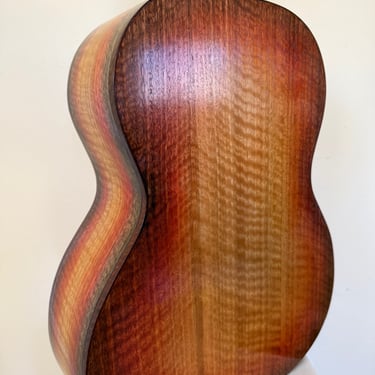
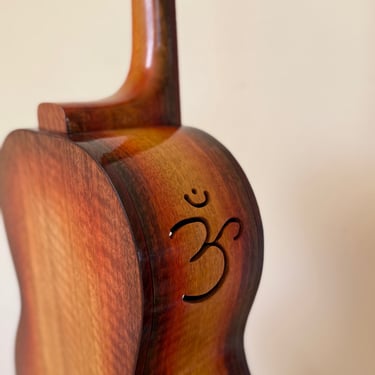
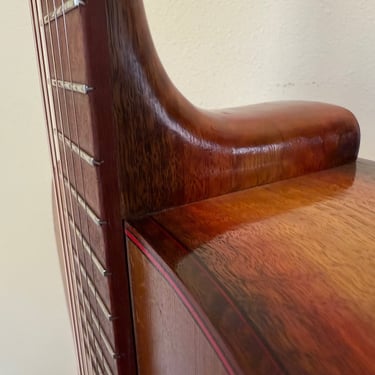
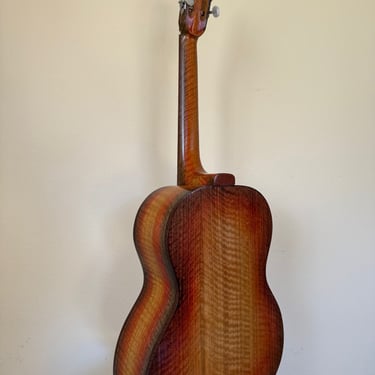
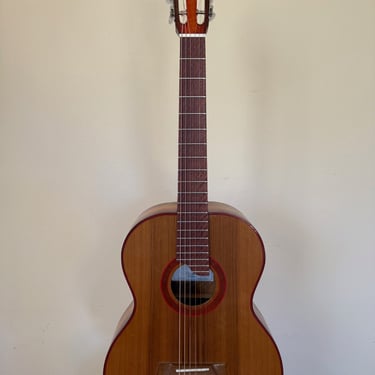
La Luna Kaivayla
Write your text here...
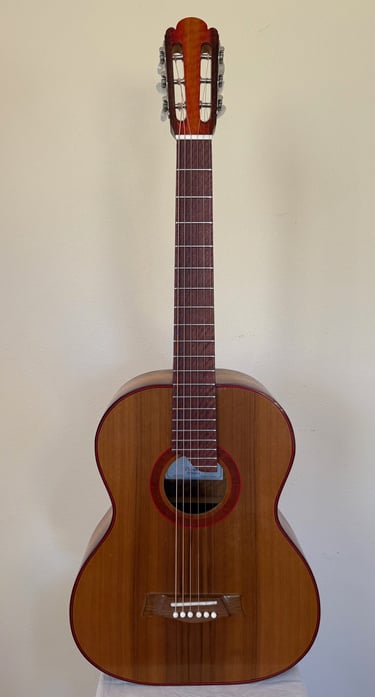
La Luna Jarrah
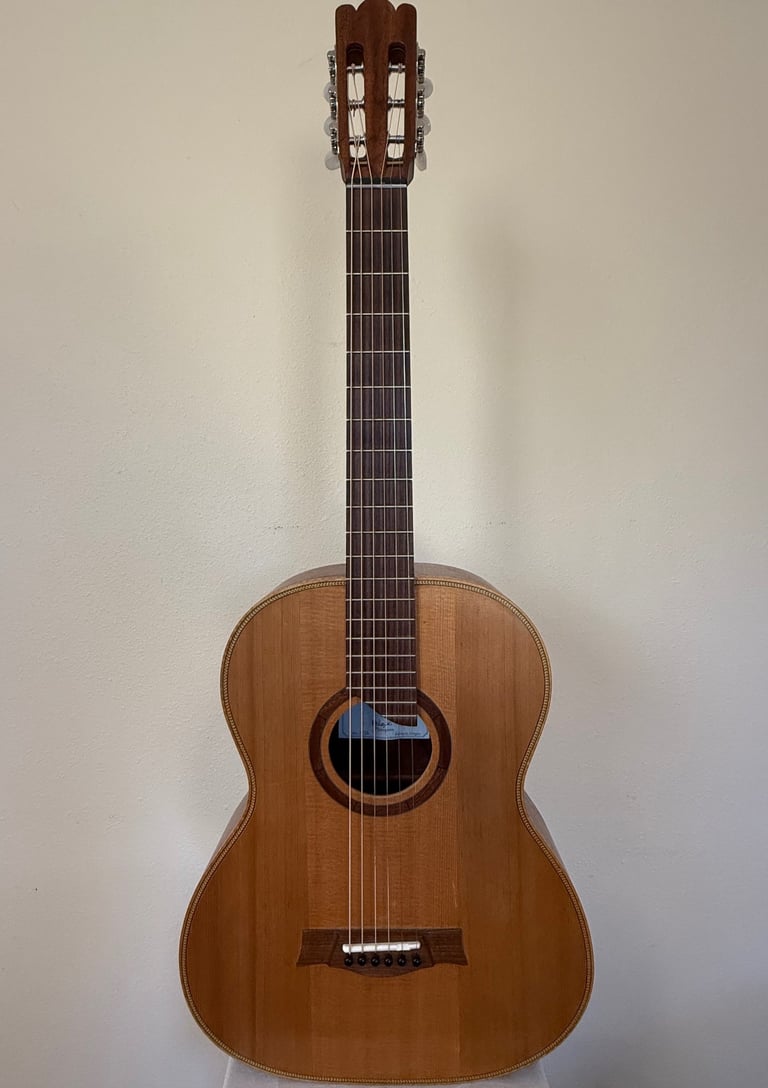
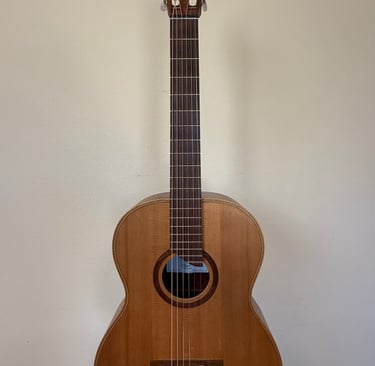
La Luna Primera
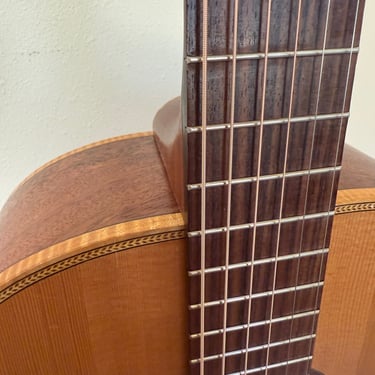
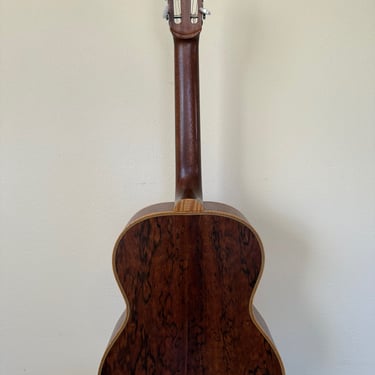
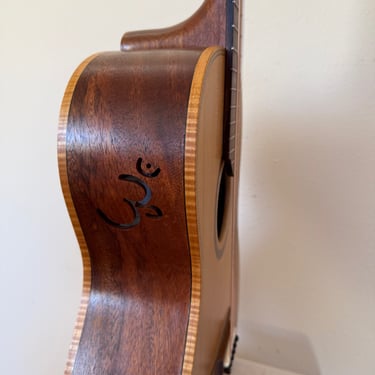
Matt Dorris plays "Vals Op8 No.4" by Augustin Barrios
Our Story
Engineering the Future of the Modern Guitar
At La Luna Castora, where I personally handcraft every instrument, I believe that tradition should never stand in the way of progress. By looking at the guitar through the lens of structural engineering, acoustic physics and a touch of intuition, I've re-imagined the body to maximize playability, tone, stability and longevity.
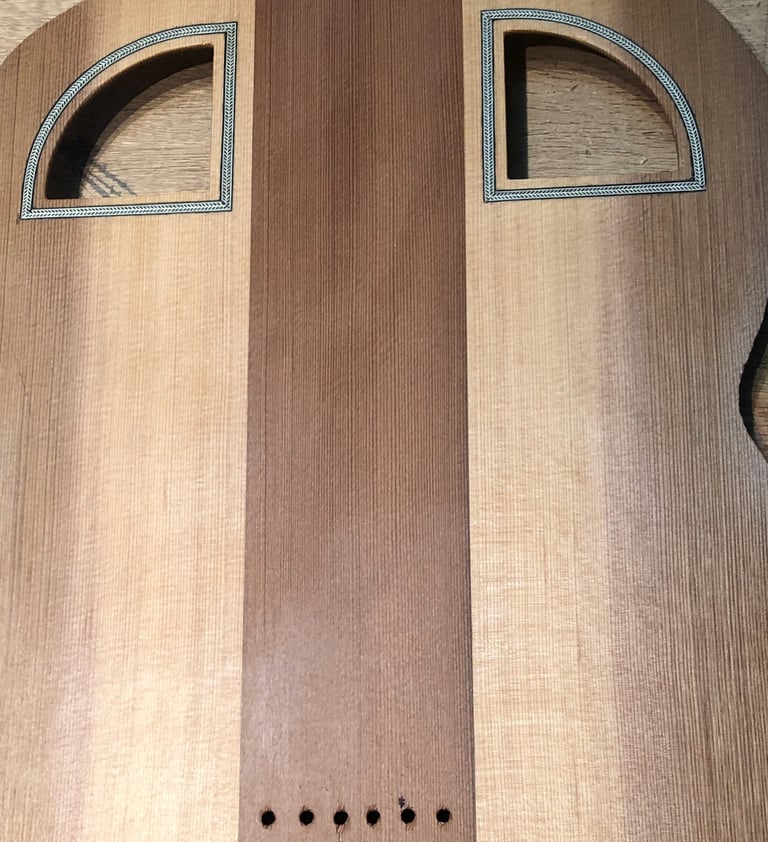
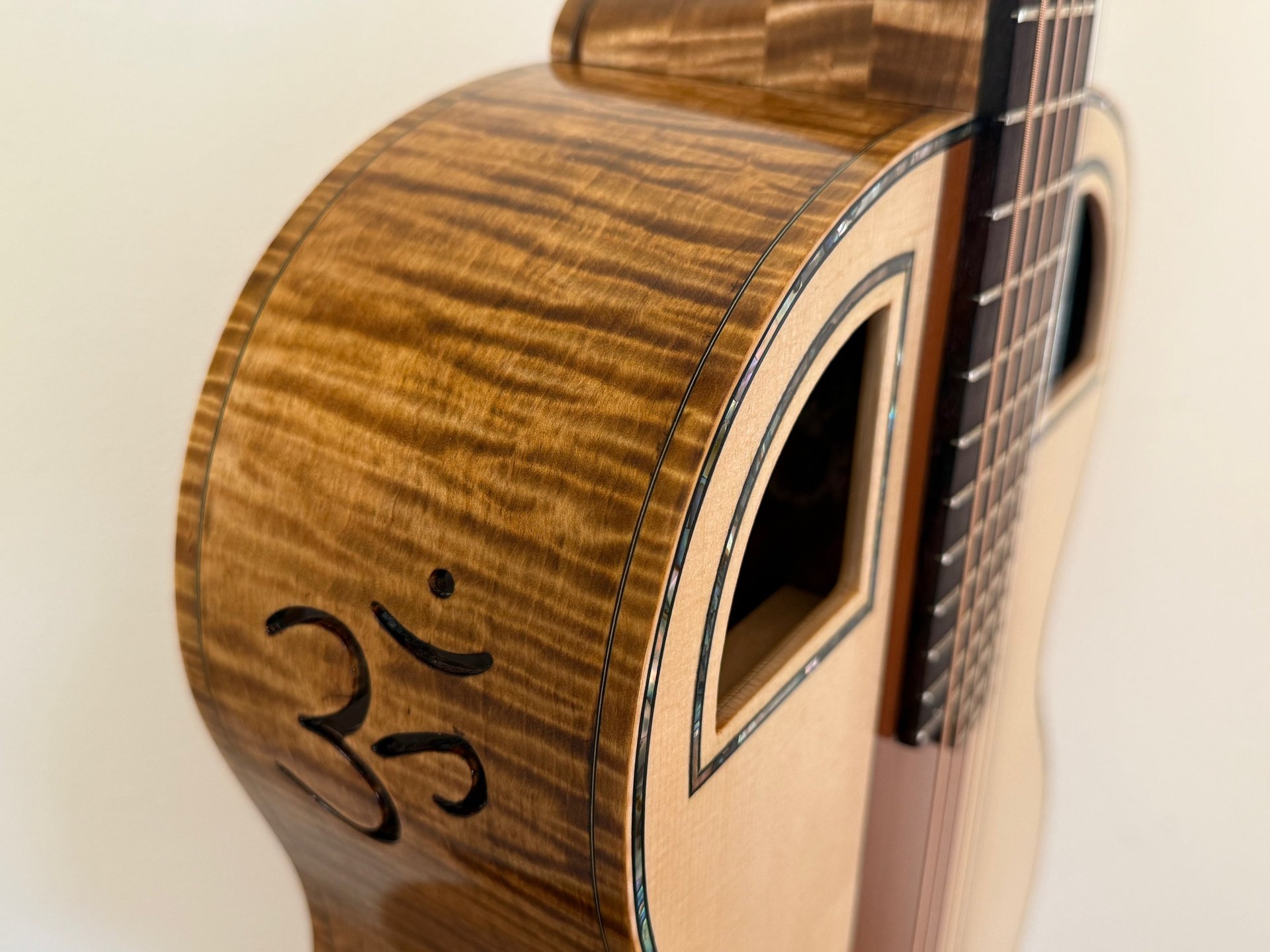
I: Structural Integrity: The Offset Soundhole
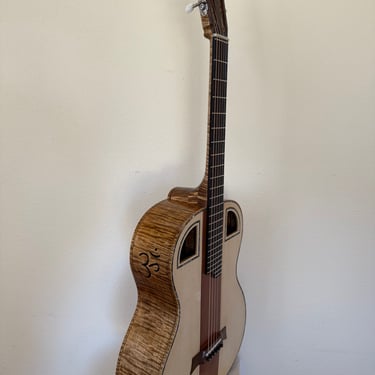
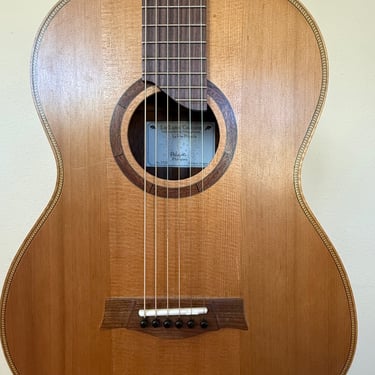
Standard guitar design places a large hole in the highest-stress area of the instrument. With roughly 160+ lbs of string tension pulling between the nut and the bridge, a central soundhole creates a structural "weak point".
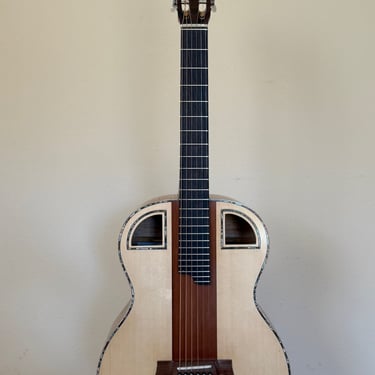
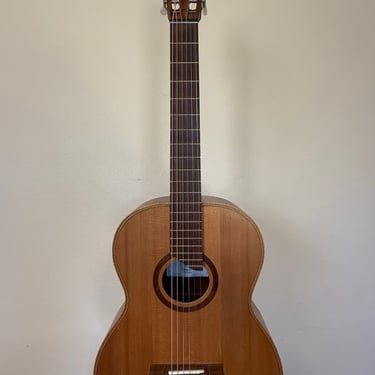
I've moved the soundhole to the upper bout to solve two critical issues:
Reinforced Chassis: By keeping the wood solid between the neck and the bridge, the top is better equipted to handle string tension without losing its shape over time.
Enhanced Soundboard Surface: Without a hole in the middle, the entire lower bout becomes a continuous vibrating surface. This extra "real estate" allows the wood to respond more fully to the energy of the strings.
II. The Three-Piece Soundboard: Material Hybridization
1. Intentional Zoning of Material Density
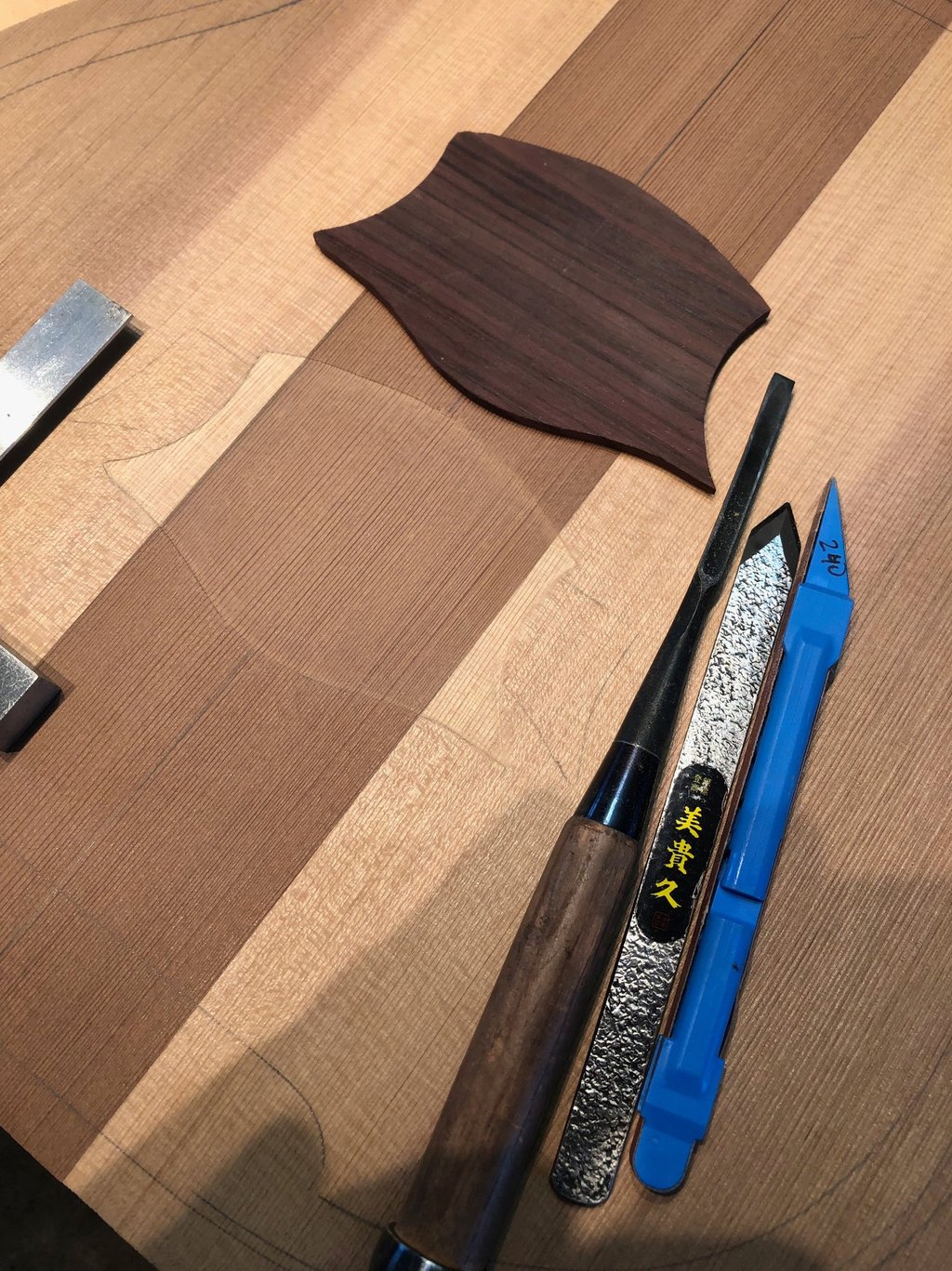
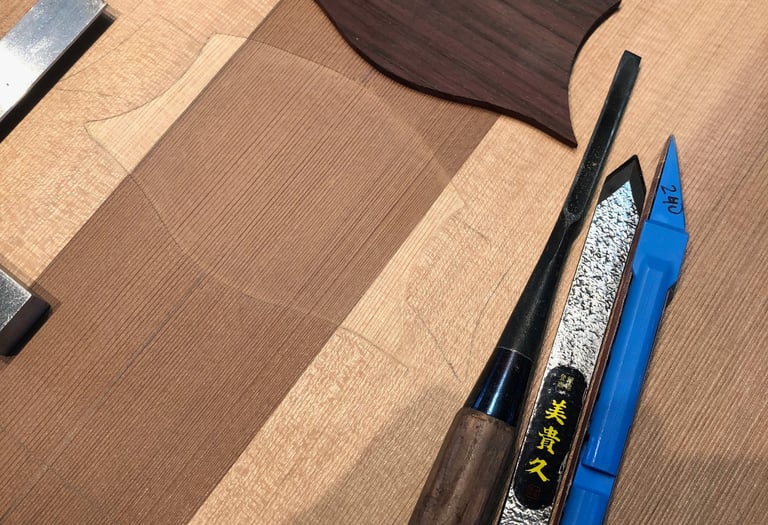
The primary technical advantage, popularized by Italian luthier Andrea Tacchi and inspired by Antonio de Torres (the father of the modern guitar), is the ability to use different densities of wood in specific areas of the top.
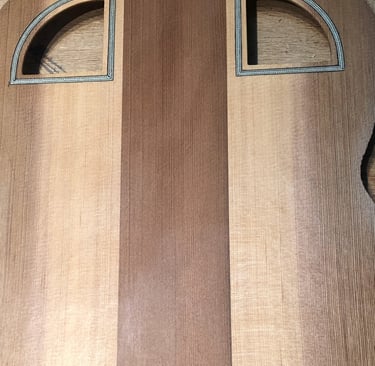
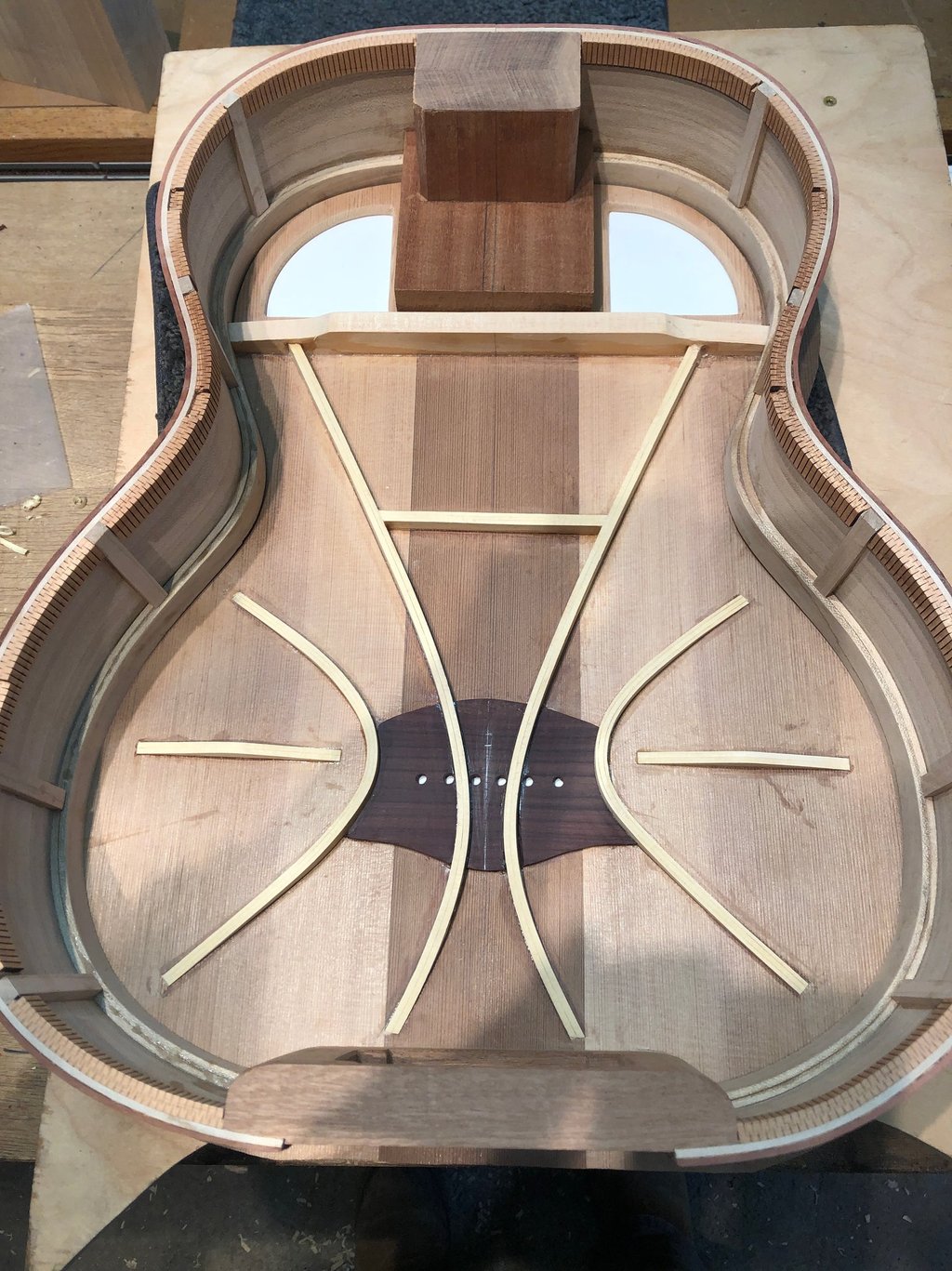
The "Thucea" Concept: Tacchi's three piece top typically uses a central strip of European Spruce (Picea Excelsa) flanked by Western Red Cedar (Thuja Plicata)
The Advantage: Spruce is stiffer and has a faster sound transmission rate, making it ideal for the "engine" of the guitar (the bridge area). Cedar is lighter and more resonant, providing warmth and responsiveness at the edges where the top needs to move more freely.
Torres' Influence: Torres sometimes used three or even four pieces not just due to wood scarcity, but to ensure the stiffest, highest-quality grain was positioned directly under the bridge to handle string tension and maximize vibration.
2. Structural Stability and "Self Bracing":
Multi-piece construction can actually make a soundboard more stable than a single or two-piece top.
Counteracting Warping: In a multi-piece body or top, different grain patterns can counter balance each other. If one piece wants to cup or twist in response to humidity, the adjacent pieces (joined with glue lines) act as structural reinforcements.
"Bombe" Arching: Historically, makers like Busato (famous for Gypsy Jazz guitars) used three piece tops to help induce a "bombe" or pot bellied arch. By heat-bending the center piece across the grain and joining the sides, they could create a highly arched, stiff, and incredibly loud top with very light internal bracing.
3. Efficiency and Sound Quality
There is a common misconception that more glue joints "kill" tone. In reality, a well executed glue joint is often stronger and stiffer than the wood itself.
Utilizing Premium Tight-Grain Wood: Large, wide pieces of master-grade spruce are rare and expensive. A three-piece design allows a luthier to use a narrow, perfect strip of premium tight-grained wood for the center (the most critical acoustic zone) and slightly wider-grained wood for the flanks.
Tonal Focus: Some builders argue that a three-piece construction provides a more "focused" sound because the central strip acts as a stable longitudinal beam, while the side pieces act as the vibrating wings
III. Falcate Bracing:
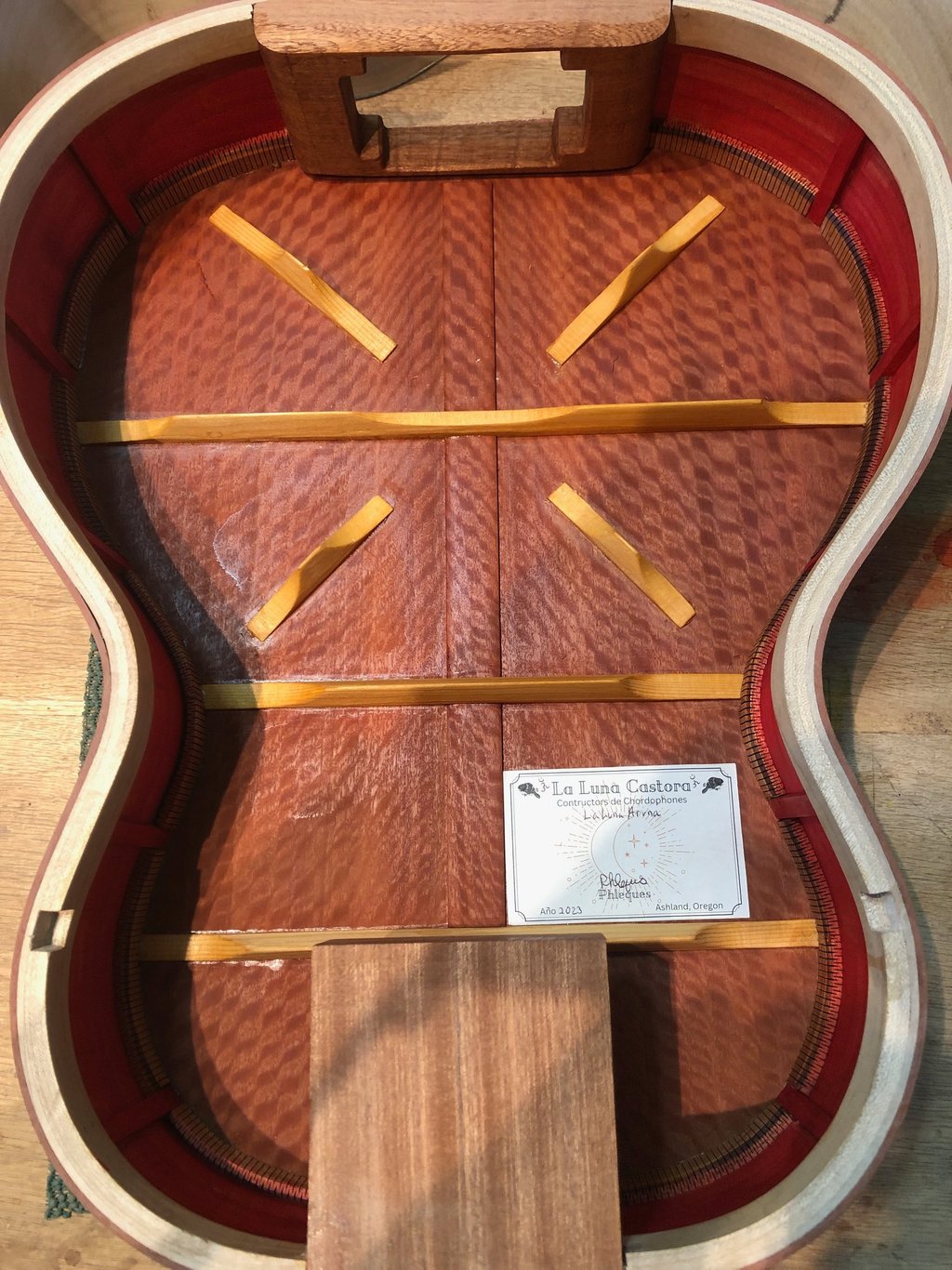
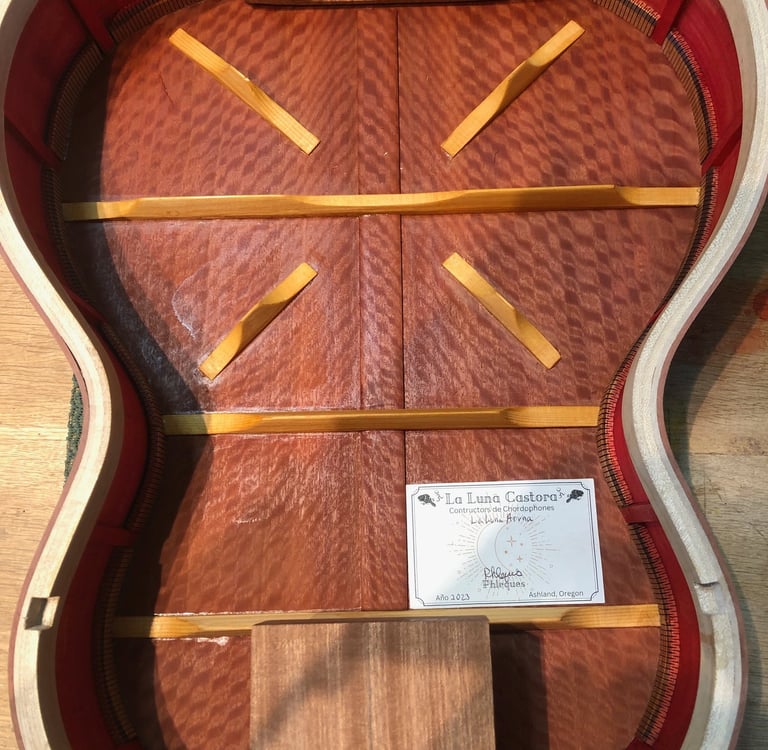
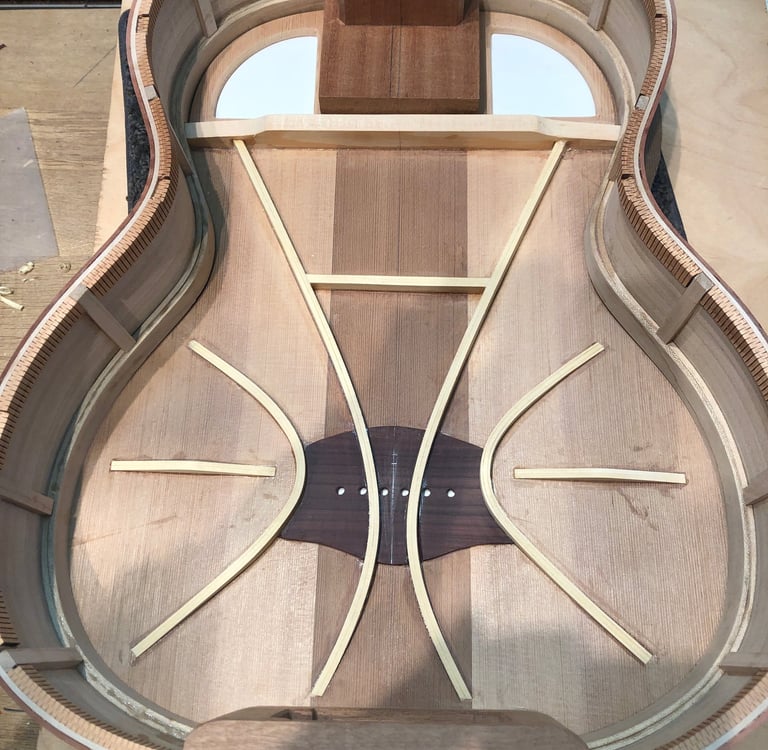
Falcate bracing is one of the most significant modern departures from the traditional X-brace. Developed by Australian luthiers Trevor Gore and Gerard Gilet, it represents a move toward a scientific, engineering-based approach to guitar construction. Unlike the straight, intersecting bars of a Martin-style X-brace, falcate bracing uses parabolic curved braces made from laminated spruce or similar wood and is often reinforced with carbon fiber threads.
The Advantages of Falcate Bracing
1. Optimized Structural Support (The Torque Factor)
The primary enemy of a guitar top is the torque exerted by the strings, which tries to rotate the bridge forward, causing the soundboard to "belly" behind the bridge and sink in front of it.
Advantage: The curved falcate braces are laid out to follow the primary stress lines of the strings. Because they are continuous curves rather than straight lines that cross, they provide more efficient support against the rotational force while requiring less mass.
2. Increased "Monopole" Mobility
In acoustics, the "monopole" mode is the way the entire guitar top moves up and down like a piston. This is the movement responsible for most of the guitar's volume and projection.
Advantage: Traditional X-braces are quite stiff at the edges ( the "wings" of the X). Falcate braces allow the lower bout of the guitar to be more flexible on its "minor axis" (side to side) while remaining incredibly stiff on its "major axis" (end-to-end). This results in a top that is more "responsive", providing more volume and a quicker attack.
3. Evenness of Tone and Modal Tuning
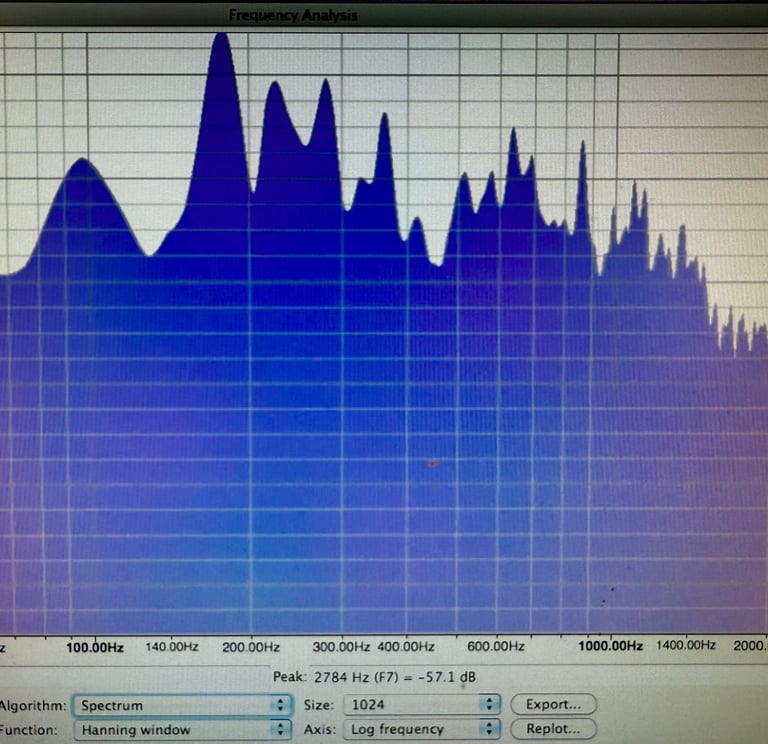
Gore and Gilet's method is built around "Modal Tuning" where the builder measures the resonant frequencies of the top and back during the build.
Advantage: Because the Falcate system is more predictable and adjustable than X-bracing, it allows the builder to "target" specific frequencies. This results in in a guitar with very few "dead notes" or "wolf tones", providing a balanced piano-like quality across the entire fretboard.
IV. The Access Port: A Luthier's Dream
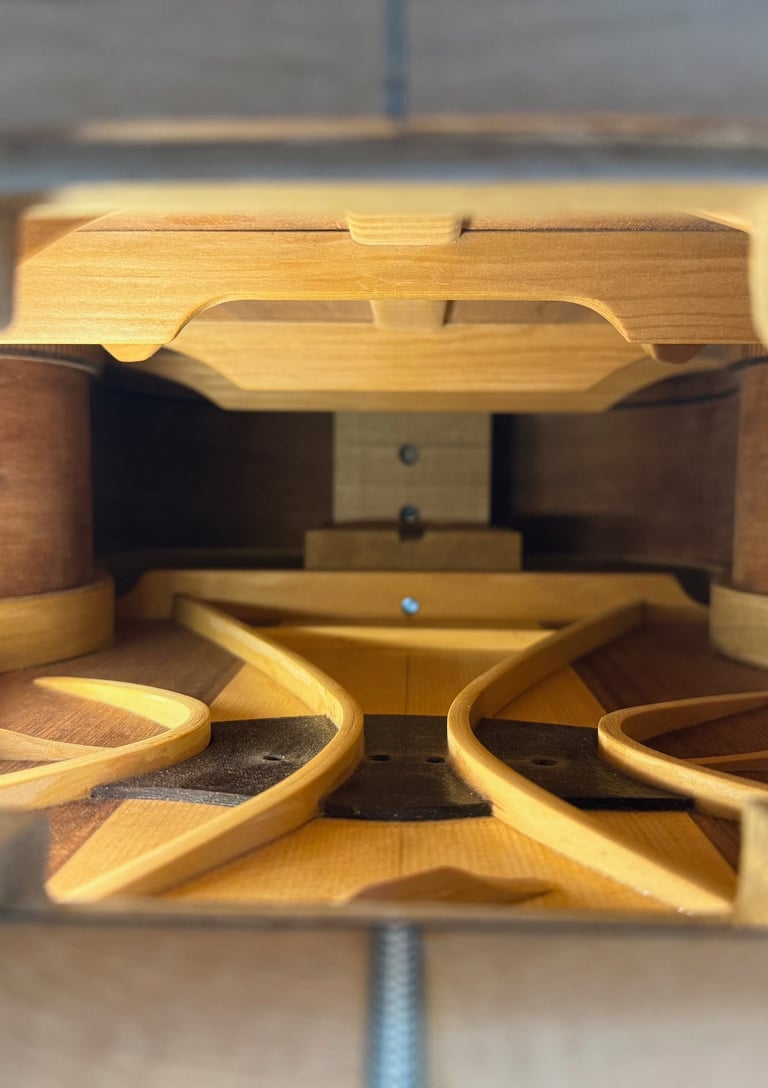
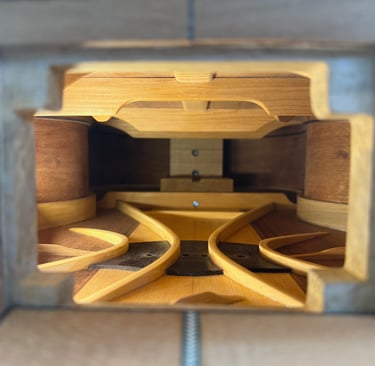
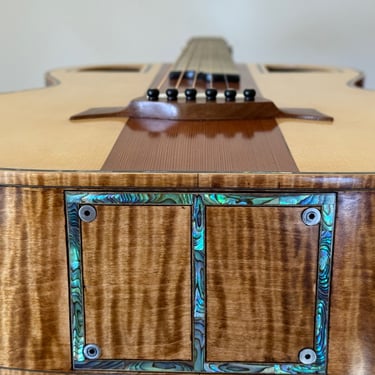
A high performance machine needs to be serviceable. My guitars feature a removable access door at the tail block, serving a dual purpose:
1. Precision Tuning: I can fine-tune the internal resonances while the guitar is fully strung and under tension, ensuring a perfectly balanced voice before it ever leaves the shop.
2. Lifetime Maintenance: Future repairs or electronics installations no longer require "ship-in-a-bottle" gymnastics. Whether it's a bridge plate inspection or a simple adjustment, your luthier will have a direct, easy access to the interior.
V. Precision Stability: The Four Point Bolt-On System
The neck-to-body joint is the most critical intersection on the guitar. Traditionally, this is a glued "dovetail" joint that is difficult to adjust and even harder to repair. I've opted for a more robust, mechanical approach: a precision-cut Mortise and Tenon joint secured by a four bolt system.
1. The Hardware: I use a square mortise cut into the neck heel, reinforced with a tapped brass rod to receive high-tension bolts. This metal-to-metal connection ensures a rock-solid join that won't "creep" over time.
2. Total Stability: Two bolts secure the heel to the body, while an additional two bolts stabilize the fingerboard extension to an internal neck block. This eliminates the common "hump" at the 12th fret and ensures the entire neck stays true.
3. Modern Serviceability: Unlike permanent glue joints, this system allows for easy neck removals or angle adjustments. It's a design built for the life of the instrument, ensuring your guitar stays playable for decades-not just years.
VI. Hot Hide Glue (HHG): Structural Integrity
At La Luna Castora, I use Hot Hide Glue not just for the sake of tradition, but for the sake of tone. Unlike modern synthetic adhesives, hide glue creates a glass-hard, crystalline bond that turns many parts of the guitar into a single, vibrating unit. It is more difficult to work with-requiring precise heat and rapid assembly-but the result is an instrument that is more resonant, more stable, and fully serviceable for generations to come.
1. The "Crystaline Bond" (Acoustic Transparency)
Unlike modern glues that remain slightly rubbery or "plastic" when cured, HHG dries into a glass-like, brittle state.
The Benefit: In a guitar, you want the vibration to travel across joints as if the wood were a single piece. Because HHG is so rigid and non-damping, it allows for maximum energy transfer between the braces on the soundboard. It doesn't "soak up" high-frequency overtones like softer glues can.
2. Zero "Cold Creep"
Under the constant 160+ lbs of tension from guitars strings, modern glues can slowly "creep" or stretch over time. This is a common cause of bridge lift or angle shifts.
The Benefit: HHG has a molecular bond that does not stretch. Once it sets, it stays put. This is why 100-year-old Martins and Gibsons built with HHG often retain such structural integrity.
3. "Self-Clamping" Action
As HHG cools and dries, it actually shrinks.
The Benefit: This shrinkage pulls the two pieces of wood tighter together. For critical joints like the center seam of a soundboard or "rubbed" joints on internal blocks, the glue actively works to make the fit more intimate than a mechanical clamp alone could.
4. Historical Repairability (The Luthiers Gift)
Modern glues do not stick to themselves. If a Titebond joint fails, you must scrape every molecule of old glue away before reglueing, which often removes original wood.
The Benefit: HHG is thermally reversible. A bit of heat and steam can open any joint without damage. Most importantly, new hide glue reactivates old hide glue. If a brace comes loose, a luthier can simply inject fresh HHG, and the old and new glue will bond into one seamless layer.
Where It is Most Helpful
While you can build an entire guitar with HHG, it is most critical in these areas:
The Bridge: For maximizing energy transfer and zero creep under high tension.
Soundboard Bracing: To ensure the "voice" of the guitar isn't dampened by rubbery glue lines.
The Fingerboard: To allow for easier removal if the neck needs straightening or replacement.
VII. Laminated Sides: The Foundation of Tone
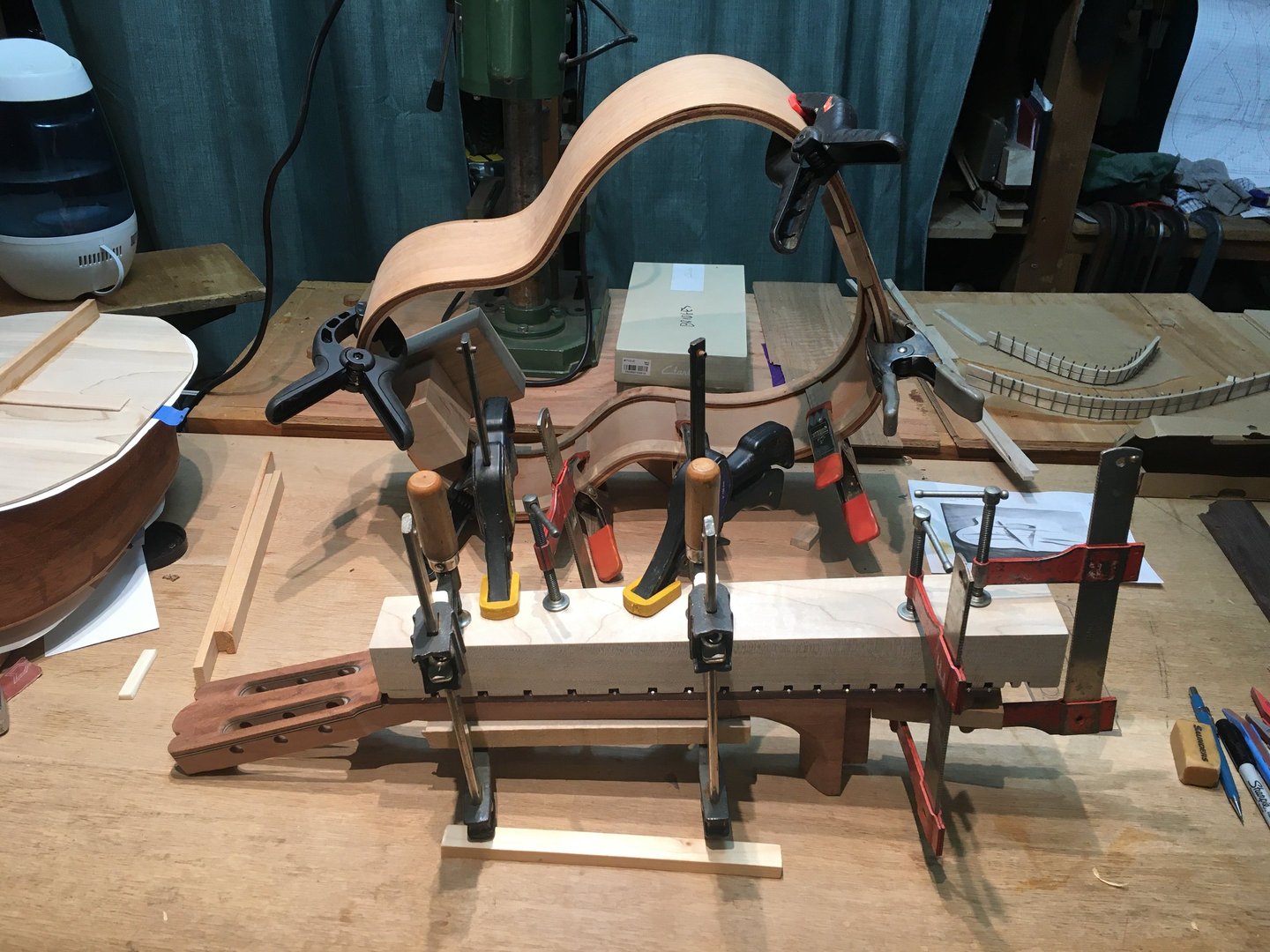
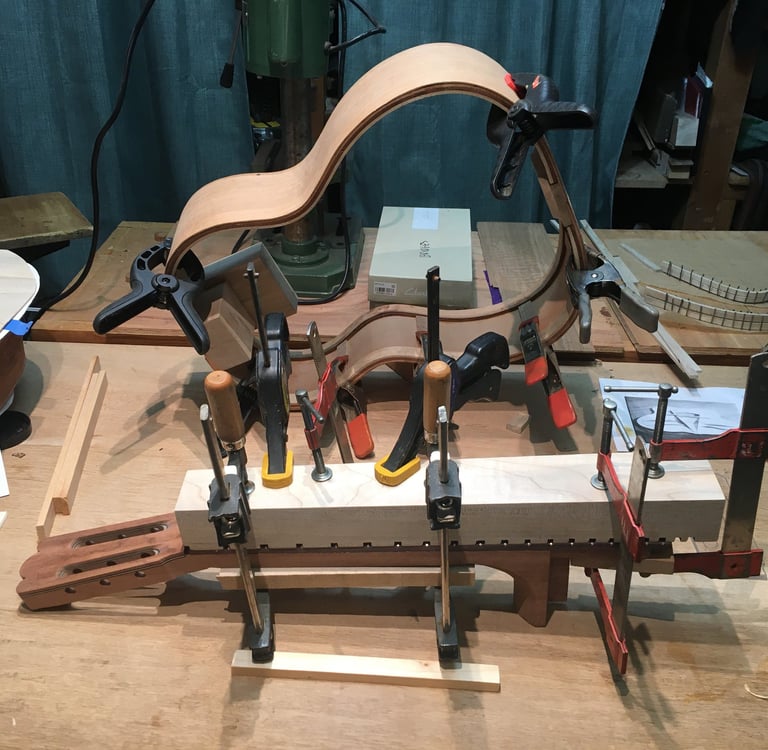
I view the guitar body as a precision acoustic chamber. While traditional builds prioritize ultra-light sides, I often utilize laminated side construction to create a rigid "rim"- much like a drum. This added mass isn't just for durability; it prevents the sides from absorbing energy, forcing every vibration back into the soundboard. The result is a guitar that feels substantial in your hands and delivers a level of volume and clarity that traditional builds simply can't match.
1. The "Drum Rim" Analogy (Acoustic Efficiency)
The most common justification for laminated sides is that the sides of the guitar should not vibrate.
The Theory: In a drum, the rim is heavy and rigid so that it doesn't soak up the energy of the skin. On a guitar, the "skin" is the soundboard.
The Benefit: If the sides are thin and flexible, they "leak" energy by vibrating themselves. By making the sides laminated and stiff, you ensure that the energy from the strings stays in the soundboard (the"engine"), leading to increased volume, punchier projection, and better sustain.
2. Structural Integrity and "Cold Creep"
Solid wood is prone to "cold creep"-the slow, permanent deformation of wood under constant string tension over decades.
The Benefit: Laminated sides act like a structural chassis. They are virtually immune to the humidity-related cracking and warping that affects solid wood. Because they are "locked" into their shape by the epoxy or glue between the layers, they provide a rock-solid foundation that keeps the neck angle and top geometry stable for a lifetime.
3. Eliminating Internal Tension
Bending a single piece of thick, solid wood often leaves "stored tension" in the fibers, which wants to spring back to its original shape.
The Benefit: Laminated sides are created by gluing thin veneers together inside or outside a mold. Once the glue cures, the side has zero spring-back. This "stress-free" rim allows the top and back to be glued on without being forced into place, which many luthiers believe results in a more resonant and open-sounding instrument.
While traditionalists value lightness in instruments, the "heavy, stiff rim" philosophy treats the guitar body more like a high-performance speaker cabinet or a drum.
VIII. Optimal Projection: 12-Fret Geometry
By joining the neck at the 12th fret, I naturally shift the bridge closer to the center of the lower bout-the sweet spot of the soundboard. Much like the center of a speaker cone, this placement allows for the most efficient transfer of energy, resulting in a deeper, warmer and more powerful projection.
The results are an instrument that is physically stronger, acoustically more efficient, and easier to maintain for a lifetime of play. I didn't change the guitar to be different, I changed it to be better.
Acknoledgements & Gratitude
Stephen Bacon and Steve Spalding: My sincere thanks to these local luthiers who unselfishly gave their time and guidance, patiently navigating my seemingly unending stream of questions and queries.
Trevor Gore: I am grateful to Trevor, author of Contemporary Acoustic Guitar Design and Build, for his ideas, accessibility and willingness to answer my emails regarding the technical theories in his work.
The Global Community of Builders: finally, a heartfelt thank you to the Guild of American Luthiers and to all the instrument builders who came before. By leaving us with a lovely part of themselves, they continue to add profound beauty to the world.
Best Regards to All,
-Phleques